American Abroad, Part 1

For years, Paris has lived on my bucket list. Decades, actually – ever since my first high school French class, when the very first French sentence I spoke was Paris est la capital de la France. Uttering those words felt very foreign. Very exciting. Very adventurous. And at last, two university degrees, nine job changes, a marriage, and three relocations later, I was going to go to Paris.
My husband and I touched down at Charles de Gaul airport on a sunny September morning. Despite our jetlag, with the help of Google and my high school French we navigated the local train service and then the subway, suitcases in tow, to emerge triumphantly from the Tour-Maubourg metro station in the 7th arrondisement. My first sight of Paris was a beautiful building facade, its windows shining in the midday sun. To my left was a bubbling fountain, and beyond that, a small shaded park. And in that moment, instantly and totally, I was in love.
Before we go further, to avoid disappointment if the following aren’t mentioned, let me disclose what I didn’t do:
- Tour the Louvre
- Shop the Champs-Elysees
- Visit the Moulin Rouge (or anywhere else in Montmartre)
- Wear a beret
Hardly anyone wears a beret in Paris. And of those who did, I suspect they were mainly tourists.
Having lived in Washington DC, a city that attracts its own fair share of visitors, I know that sightseeing often creates photo opportunities but not a true sense of place. I did concede to taking an open-top Big Bus tour, and happily grabbed shots of Notre Dame, the Paris Opera, and various monuments. But I also insisted that we hop off to walk in the Tuileries Gardens, and to visit the art and booksellers with their stalls along the Left Bank of the Seine. And we did join the crowds who flock to Versailles.
From its golden gates to the sprawling palace with its famed Hall of Mirrors to acres of artificial lakes, fountains, and formal gardens, Versailles is built to astound. And it does. But not even that power and splendor could prevent Louis XVI, and his Austrian-born wife Marie Antoinette, from meeting the blade of the guillotine.
I could not see Versailles without thinking of the bloodshed of French Revolution. I could not look at Notre Dame without remembering the terrible acts of religious violence that have marked Paris. Even the Eiffel Tower is not immune – today its lights sparkle in the Paris night, but during the German occupation of Paris in World War II, daring residents cut the elevator cables so that Adolf Hitler would be unable to get to the top of the monument unless he climbed it. (So far as we know, he never did.)
For Paris is a city that shows the magnificence of humanity, but also our cruelty. I did not want to be a careless visitor, one who saw only Paris’ beauty and forgot what suffering had occurred among its boulevards and parks.
So what did I do in Paris? I walked. I ate in bistros and cafes – lots of them. My husband and I strolled along the banks of the Seine at night and watched as the city lights reflected in its dark waters. We sought out the spot where medieval pilgrims left Paris to begin the long journey to the shrine of Santiago de Compostela. I indulged in all sorts of carbs: crepes, croissants, wine. I visited a bookstore and purchased the Paris Snob Guide, 1967 edition.

I even spoke a little French. It was uncanny to be able to understand much more of a a language than I could express. I listened to waiters or department store staff or radio DJs, and I had a sense of the conversation. But I didn’t have the spoken fluency to be able to answer. Sometimes the Parisians defaulted to English. Sometimes there was pantomime. Sometimes we had a hybrid conversation that switched between languages. My best French moment was probably a request to the concierge for a new hairdryer. We did it entirely in French, even the bit where he explained to me that the room key needed to be inserted in the slot for the light switch. And I responded, in French, that yes, we did that, and no, the hairdryer didn’t work and hadn’t worked since we checked in. He kindly found me another one.
And I watched Parisians. The daring motorcyclists and scooter riders zipping through traffic. A dad and his toddler son at the cafe opposite ours one evening. The man calmly smoked with the baby in his stroller beside the table. When the child grew restless, dad lifted him out and set him on a chair, and continued with his cigarette. The businessman in a park who, having finished his lunch, took off his suit jacket and laid it on the grass. He then lay back and rested for the remainder of his lunch hour. At its conclusion, he picked up his jacket, shook it off, and returned to work.
One of my favorite things about travel is the chance to see people in other parts of the world living their lives. And, perhaps, to step into an alternate version of my own.
The version where I wake to new foods, new sounds, new things to see.
And perhaps, just perhaps, I stepped closer not only to the person I aspire to be, but to a more authentic version of myself. The self that watches. The self that writes. On the morning of our last day there, I was up early. I opened the windows so that I could sit on the bed and gaze out at the cathedral opposite. It holds the tomb of Napoleon Bonaparte. Six stories below, Parisians moved toward the city center on their morning commute. I opened my journal, picked up a pen, and knew that I was exactly where I was supposed to be.
Next Month: American Abroad, Part 2, with adventures on the French Riviera.
Roll Like Thunder, Gone Like Smoke
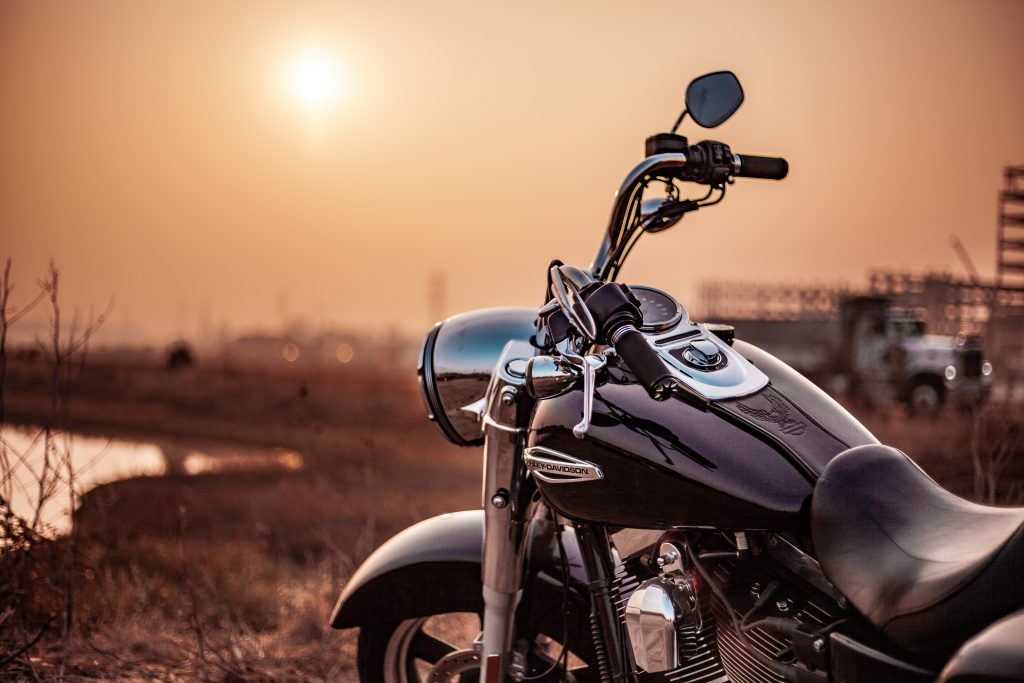
Accidents happen. Specifically, motorcycles accidents. And I knew, as a rider, that sooner or later one would happen to me.
The day started out beautifully. Bright sunshine, clear skies, temperatures cool enough to make wearing jeans, gloves, a helmet, and a padded jacket pleasurable. My husband Vince and I headed north from Pittsburgh, me on my sporty 883 SuperLow and Vince on his Indian Scout.
Long shadows stretched over the asphalt as we rode up the interstate. Fog rose in white clouds among the treetops when we crossed the Ohio River. I revved into 5th gear and felt the wind rush over my hands, arms, and chest. And it felt good.
Miles 1 through 46 of the journey passed without incident. After a hearty pancake breakfast at our destination, we decided to continue our ride along the shores of a nearby lake. As we made our way along the two-lane road that would take us there, I attempted to make a turn over some gravel. The motorcycle lost traction and went down, carrying me with it. In less than a second I found myself on the ground with my left leg pinned underneath 500-plus pounds of angry metal.
I tried to pull free and couldn’t. The bike was too heavy, and my injured leg didn’t have the strength for me to drag it out. For a few scary moments I was pinned and helpless, cars passing me by on the road, until my husband lifted the bike so that I could get clear.
I knew I was hurt. I didn’t think anything was broken. Still, my knee was thobbing and once I was able to take a look I discovered a deep gash that had bled through my jeans. Tiny bits of yellow adipose tissue poked through the cut. My left arm and shoulder – the side I’d landed on – were sore. But thanks my helmet and leather gloves, my hands and face remained unscathed.
My first priority was treating the cut. We didn’t have a first aid kit with us, so Vince went into town to get supplies. Meanwhile, I made my way to a spot under some trees and rolled up the leg of my jeans. I wanted to allow the cut to bleed freely until I could properly clean it; doing so would help dislodge any dirt or debris that might have gotten into the puncture.
My impromptu wound triage was interrupted by the arrival of an employee of the small business whose parking lot I was loitering in, albeit under duress. He took a look at me and then my motorcycle, and quickly invited me in to use the sink and first aid kit. By the time Vince returned, all that remained was for him to ACE-wrap my knee. A couple Good Samaritans in the shop helped get my cracked windshield back into place.
My options were now to either leave the damaged Harley behind and ride two-up behind my husband. Or I could climb back on for a 50-mile return trip to Pittsburgh.
Vince and I had never ridden with me as a passenger, and the highway didn’t seem an ideal place to learn. My motorcycle, despite its damage, appeared operable. So like the Chris Ledoux song, I decided to cowboy up.
Thanks to the bandages, the bleeding on my leg was slowed. Still, it would likely need stitches. And since it was the leg I used to shift gears, the ride back wasn’t going to be exactly comfortable.
But I made it. There were challenges, and not just physical and mental ones. We had to make another stop to get my left mirror back into place after I found it was dangling dangerously askew (and preventing me from seeing any traffic on my left side.) Seconds before I was about to merge back into the freeway I realized that my clutch was sticking. A clutch lever that didn’t release meant that the engine wasn’t able to engage the transmission. No transmission engagement = no changing gears. Luckily, I was able to pop the lever outward and get myself into a gear that allowed me to travel at highway speed.
Troubleshooting mechanical issues while riding a motorcycle is never something I imagined myself doing. But I did.
Back in Pittsburgh and after my stitches from urgent care, I immediately thought of what I could have done differently. Of what I would do better next time. Of how I could be safer.
I took some comfort in the fact that I dressed for the occasion. Riding around in a t-shirt and without a helmet looks cool, but it’s not so awesome if your bare skin hits asphalt at 70 mph. Motorcyclists have enough disadvantages when it come to safety to begin with – no airbags, no seat belts, no rearview mirror, no standard ABS – that any step to reduce risk is, in my mind, worth doing. If anything, I’m more convinced now than ever of the necessity of proper gear. (Kevlar-lined jeans, anyone?).
Of course, protective apparel can only do so much. Skills and technique are also key. I’ve been reading up a lot on how to ride safely on gravel. Not surprisingly, there are an abundance of blog posts and even videos with tips on how to do this.
As I look back and as the episode replays in my mind, I ricochet back and forth between thinking of it in two ways. The first comes from fear. What if. What if next time, I’m seriously hurt. What if my bike is totaled. What if it’s an accident that I can’t get up and walk away from.
The other is pride. Something scary happened. But I didn’t cry or panic or fall apart. I got back up, and I met the challenge. I’ll be better next time, and smarter, and hopefully safer.
I still fight my fear. My first ride after the accident was me against my “what ifs.” I have to learn to trust myself again. And the only way to get better is to keep going.
Yesterday, for the first time, I went out on a road that has intimidated me for months. Stopping and starting on hills. Intersections. Merges. Curves. Highway. And I didn’t do it on my sporty. I did it on a burly 1700cc Harley-Davidson Softail Slim. I felt like I was punching a bit out of my weight class, but I came back smiling.
As Kurt Vonnegut wrote, “Watch out for life.” Life on the highway threw me a few challenges. But something tells me I’ll be back for more.
Last Call at the Gem Saloon

In May, HBO’s Deadwood made a long-anticipated return in a film that reunited many original cast members and tied up lingering story lines that had languished since the show’s abrupt end in 2006. I’ve long been a fan of the series, which has some of the best writing and most memorable characters I’ve seen on television. While the dialogue is notoriously profanity-laden and the show often veers into unflinching brutality, at its core Deadwood is a story about community. It’s about what civilization and compassion looks like in a world that rarely rewards either.
In fact, the gamblers, gunslingers, and adventurers of the fictional Deadwood inspired my visit to the South Dakota town – and a night spent in the haunted Bullock Hotel – during the cross-country roadtrip that prompted this blog.
To celebrate the Deadwood movie, a theme dinner was in order.
Menu:
- Golden Sweet Cornbread
- Blistered Green Beans
- Vegetable Fried Rice (a nod to Mr. Wu and Deadwood’s Chinese community)
- Flame-Grilled Steak
- Peach Cobbler with (Unauthorized) Cinnamon
The amateur mixologist in me seized the opportunity to create a cocktail in honor of the occasion. Thus was born the Alma Garrett. Like it’s namesake, the drink is complex and nuanced, with a flair for understated drama. Besides, a character tough enough to refuse to be cowed by her husband’s murder, overcome a reliance on opium, take in an orphaned child, found Deadwood’s first bank (backed by the strength of her own gold claim), and train a former brothel worker to be her first teller deserves to have a glass raised in her honor. Not to mention, her impossible romance with town sheriff Seth Bullock. Alma, this one’s for you.
I took inspiration from the classic French cocktail, kir, which blends white wine with blackcurrant liqueur. But instead of the liqueur, I substituted a blackberry shrub. Why shrub? And why blackberry?
Historically, shrubs were popular in the 19th-century United States. Made by blending vinegar with berries or fruits, shrubs served as flavorings as well as a means of preservation. I liked the idea of using shrub as a throwback ingredient that could be reminiscent of something Alma herself may have sampled. But rather than a cultivated fruit like peaches, strawberries, or raspberries, I wanted a flavor that hinted at the frontier. I wanted something wild. After all, Deadwood is a place where town boss Al Swearengen and Gem Saloon proprietor dispenses advice along the likes of:
“The world ends when you’re dead. Until then, you got more punishment in store. Stand it like a man. And give some back.”
That’s Al’s idea of a pep talk.
Using my blackberry shrub as a base (I riffed on this summer fruit shrub recipe from The New York Times), I had a little fun with mixology. Alma’s character has an air of elegance, sophistication, and fashion, even in the rough environs of Deadwood. She strikes me as a woman who would appreciate a taste of Paris wherever she was. So I subbed my shrub for blackcurrant liqueur, topped it off with a sparkling white wine, added a few fresh berries for garnish, and voila! The Alma Garrett.

The result? Magnifique!
Want to make your own? Here’s the recipe!
Alma Garrett
- 1 part Blackberry Shrub (instructions listed below)
- 3 parts sparkling white wine (Moscato, or use champagne for a twist on a kir royale)
- Fresh blackberries to garnish
Blackberry Shrub: Crush 8 ounces fresh blackberries in a glass or porcelain bowl (don’t use metal or plastic). Add 1/3 cup granulated sugar. Mix well, until berries are pulpy and the sugar is nearly dissolved. Cover with plastic wrap and chill overnight. Uncover, stir well, and add 1/3 cup apple cider vinegar. Stir again and refrigerate for several days (up to 1 week). When ready to use, strain the shrub through a fine sieve or cheesecloth into a clean Mason jar or bowl. You want to retain the liquid and remove seeds and fruit pulp. Store unused shrub in the refrigerator.
To make the cocktail: Measure the shrub into a champagne flute. Top with sparkling wine. Garnish with fresh berries and serve at once.
Confessions of an Insecure Biker Girl

An English major walks into a Harley dealership. No, this isn’t the start of an awkward joke. Or a dare. Or an accidental wrong turn off the highway.
It happened. And perhaps, it was inevitable that it did. Perhaps it was the culminating stage of my case of motoritis that had been progressing for years. (The early onset of this condition is chronicled in my previous reflections on doing scary sh*t.)
I’d been puttering along more or less happily on my little Honda Rebel 250. But I no longer wanted to putter. I wanted to roar. Motorcycles aren’t for those who want quiet lives.
What louder, badder, don’t mess-with-me motorcycle is there than a Harley Davidson?
Naturally, I did my research. I read online reviews, flirted with the idea of the now-defunct Yamaha Star, visited an Indian dealership to check out the competition. When I expressed interest in taking one of the Indian bikes for a test ride, the salesman demurred. I smelled a brush-off. And I suspected the reason why. Despite the salesman’s claim that no local dealerships were allowing test rides, I decided to try my luck with the Harley boys up the road.
Harley said yes. Sure, they wanted to sell me a motorcycle. But after checking my license and hearing my assurances that I’d brought my helmet and gear with me, there was no quibbling. And just like that, I threw a leg over a Harley for the first time.
And it felt good. Damn good. I remembered all too well my first catastrophic attempts to simply get a motorcycle started. I stalled out countless times. When I finally got the throttle engaged, I was so shocked that I lost control of the bike and down we both went onto the asphalt.
Not so today. The enormous Milwaukee 8 engine rumbled to life with the touch of a button. I asked and the machine obeyed. The grin stayed on my face through first, then second, then third gear as I made triumphant laps around the parking lot.
Some of the sales staff were less accommodating. At a different dealership, I got called honey and darlin’ so many times as to have a palpable effect on my blood pressure. But I wanted to upgrade my motorcycle more than I wanted to deliver a lecture on how to sell motorcycles to females, so I bit my tongue while quietly contemplating what it would take to start a woman-owned Harley dealership.
Because, as it turned out, I knew more than some of the men assisting me. In the wee hours of the morning, I flipped through parts catalogs and watched YouTube videos learning how to change rocker box covers. I’d always been an apt student, and darned if I wasn’t going to throw myself into learning as much as I could about the mechanics of riding free.
But of course motorcycles are far more than an intellectual exercise. There was the first time I caught my reflection after a ride, leather jacket on and hanging unzipped, helmet in hand, and the sight startled me. Same with when I saw my shadow as I rode through winding suburban streets on my sleek black Sportster. I was me, but me as I’d never seen myself before. And I liked it.
I’d reached the tipping point where excitement won out over fear. Sure, there are still some rides I don’t feel quite ready for. It’ll likely be years before I head out to Sturgis. Even Pittsburgh’s hills are notorious, and I practice my techniques for stopping and starting on inclines regularly around the neighborhood. It’s enough so that it gets noticed. In fact, it gets noticed by women. Women who ask how long I’ve had a motorcycle. Women who stop their cars, teenage daughter in the passenger seat, to say my riding looks good.
And that is the best part of it. I like to think my shiny chrome pipes are blowing out estrogen along with exhaust. I like to think of other women who never waited for an invitation, but simply believed they had as much right as anyone else to ride. And so they did. And so do I.
Disclaimer: The opinions expressed in this piece are the writer’s own and imply no formal endorsement of any brand or product.
Neither Here Nor There
Note: The following was originally written in the early spring of 2017, while participating in a travel writing workshop with the wonderful Eric Weiner at DC’s Politics and Prose. This month, March 2019, is the one-year anniversary of my return to Pennsylvania. It seemed a fitting time to share.
The segments of my life can be measured by a suitcase. First the big cheap black one that I took with me to Nicaragua – I was fifteen years old and it was the first time I left the country, laden with optimism, with an innocent desire to do good. So I carried with me plastic trinkets and school supplies to give away to the kids that I knew I’d find there, kids that when I met them sometimes had bellies rounded with malnutrition and whose hair grew stiff and orange from their heads like straw. Then college, the same black suitcase, this time with my newly-purchased sweaters and spiral-bound notebooks and a little caddy to carry my shampoo and toothpaste back and forth to the common shower on the all-girls floor. A few years later that suitcase rolled with me on a Greyhound bus the summer I left home and spent the months from June ‘til August sleeping on the sunporch of a friend’s apartment. Then again, the same black suitcase straining at the seams as I wheeled it through the departure terminal at the Pittsburgh International Airport, my eyes fixed straight ahead. A plane waited to carry me to England and graduate school, and the preceding twenty-three years of my life were pared down to what could fit into a space no greater than 35.5 x 29.5 x 16 inches. My past and future compressed together, squeezed tight to comply with the checked baggage allowance of British Airways.

I did not ask myself, then, what I was leaving, what I was getting away from. I’m not sure that I can answer even now. Sometimes I think of returning, even if I don’t yet know the answer to what I’d be seeking once I got there.
There is the farmlands and tumbledown towns of western Pennsylvania. The place where wooden houses painted in fresh white with a single curtain tied back in each window indicate that an Amish family lives inside. Where each small town has at least one hardware store and at least two bars and probably more churches, and it used to be that people at the local supermarkets would carry your groceries out to your car and not expect a tip. Where in summertime children play in cricks, not creeks. When the fields got planted the air is filled with the different scents of manure: the traditional kind, earthy and brown and almost pleasant because it was so familiar, and the liquid kind made from the feces of pigs that stank and spread for miles if the wind blew in a certain direction. We all drank pop.
I left but I haven’t stayed away. Is it survivor’s guilt that troubles me when I return? The black suitcase has long ago disappeared, but I still have the luxury of moving in and out. Others don’t. I can step into my late model Honda – the Touring edition with heated leather seats – and drive, leaving behind the empty storefronts and the strip-mined hillsides and the acres upon acres of cornfields that, when shorn and empty in winter with the remnants of skeletal yellow leaves rattling in the wind, create a sense of barren bleakness that is hard to shake even indoors. I can drive away and return to my job with its salary that is considered almost decent by city standards and princely by most Pennsylvania measures, return to skim milk lattes and Pilates classes, return to a world where people patronize farmers’ markets but have never had the muck of manure touch their shoes.
Yet even in the insularity of suburbia, I lived in silent fear of collapse. There are the quirks. Such as why my closet is filled with clothes that have long outlived both style and utility: a pink lace party dress that hasn’t fit in years, green t-shirts with “Beechwood Garden Center” emblazoned across the back from a summer job I had over a decade ago, the faded cotton pants and jacket and bright belt from the black gei I wore for karate lessons in high school. Why I return half-consumed cans of soda to the refrigerator, their open tops covered carefully in plastic wrap so that I can drink them later and there is no waste.
I and the other exiles are in the in-between. We are half-breeds born and bred of small towns and farms, passing anonymously (if we’ve lost our accents) through urban America, one foot on a subway platform and the other on a gravel road.
And yet I did not come to the city ignorant, a blank mind waiting to be filled with the secrets that only the concrete and crowds can teach. I came knowing when the spring peepers sound in the ponds, the noise throbbing in the air so that it creates a living wall of sound. I know the time when the sap rises in the maple trees, and how long it takes to boil it down to syrup that is sweet and thick and wild. I know the time to hunt deer in the woods after the leaves of the oaks and maples have fallen, and when the baby calves are born with their wet coats and wobbling legs. Even before I touch the kernels I can tell the difference between field corn and sweet corn. I know where to find wild blackberries, and along the streams and wetlands I’ll listen to the blackbirds singing and find which tadpoles will turn to frogs and which ones will be toads. All of these things I learned without knowing how I came by them.
And there are the lessons of the city, too, the rhythms of its language. Getting rid of “crick” and “pop.” Hailing taxis. Learning how to understand people with different accents without constantly asking them to repeat themselves. The art of small talk with someone who you don’t know well but who might be rich or important. And how to never be too honest, which is a lesson that I find the people in the country know as well.
The road I travel is a circle. There is no horizon to find. I live between two sets of waypoints, one where I mark time by commuting distance and billable hours, and the other that shifts from my hands as I reach to measure it. But still, there is the relief of sometimes catching, in the distance, the sounds of spring peepers, or forgotten smells like new-growing hay with the scent of earth and grass and sunshine coming together that makes my heart skip a beat and sends me back, whirling, into the past.
We all run. It’s only a question of how far we get. Of the distances we cover that cannot be mapped. Of the places we find ourselves in that have no coordinates.
Bourbon-Free in New Orleans

The first pictures I formed of New Orleans came from Anne Rice. Like thousands of other teenagers, I devoured Interview with the Vampire in both its novel and film variations. In my imaginings, the images of New Orleans came through vampire eyes – a place dark and romantic, full of strange and slightly threatening beauty.
And like Rice’s vampire protagonists, I came to New Orleans hungry. I feasted on cafe au lait, boudine hash, scrambled eggs, and biscuits topped with cane syrup. An inconvenient headcold prevented me from sampling any of New Orlean’s alcohol or legendary nightlife, but I did indulge on the pleasures of food. Gumbo file. Chunks of alligator meat seasoned with Cajun spices. Shrimp (of course). Red beans and rice (of course). Obligatory beignets from Cafe du Monde. I ate like a tourist. And I ate well.
But I came to New Orleans for more than food. In this I was not disappointed. I visited the bayous and watched as our guide lured alligators from the brown swampwater with a few tossed marshmallows. I toured stunning plantations, included the fabled Oak Alley (used in the film Interview with the Vampire, and set cinematically alight by Brad Pitt), and listened as guides spoke of both the Creole families who lived in those mansions and the slave families that built them.
I sloshed through Bourbon Street one night in the rain, the refuse of a thousand indiscretions detectable on the breeze, and in the water rising around my ankles.
I spent nearly a full day at the World War II museum, lost in time and feeling shaken from my vantage point of having been born well after its conclusion. Certainty, I learned, is a gift that comes only in hindsight.
Perhaps inevitably for a city that has built its recent reputation on hedonistic pleasures, much of New Orleans is predictably tacky. Hordes of intoxicated tourists roam the thoroughfares, some of them pushing strollers. Shops sell T-shirts with lewd slogans, and beads and bottles of hot sauce are everywhere.

Window in the French Quarter. 
Beignets and chicory coffee, Cafe du Monde 
Lafayette Cemetery, New Orleans 
Conti Street sign, New Orleans 
Laura Plantation 
Swamp tours on demand. 
A quarter mile of live oaks at Oak Alley
Still, there is something mysterious under the surface. Despite modernity, the city is still defined by its geography. The river. The levees. The heat. Nature cannot be escaped, and must be tolerated.
Even in October, vines and blossoms flourished, and trees grew thick with Spanish moss. I caught glimpses of the pastel mansions in the Garden District as the streetcar rolled past. The sides were open, allowing in a rush of humid air. I stepped off and soon reached the gates of one of the Lafayette Cemeteries. A black crow fluttered in one of the treetops. It would have been ominous were it not so perfectly times. I walked among the grounds, weeds and grass poking through the crumbling pathways. The mausoleums are overrun with plants as if even stone and concrete can decay.
In the 300th year since its founding, New Orleans was a reminder that America was not always American. The land was a battlefield for European empires, and home to millions of native inhabitants. New Orleans, after all, had been French. And before that, Spanish. And before that, the Chitimacha tribe farmed, fished, and hunted along the waters leading to Lake Pontchartrain.
On my first night in the city, music and shouts from the street brought me to my hotel room window. Looking down, I saw what first appeared to be a parade. But on second glance, the figures were recognizable as a wedding party. The bride and groom led the way, followed by their guests and a second line that created a joyful procession through the street. And during my last meal, I heard music again – horns and drums that grew louder and louder until they literally passed by the window I was sitting beneath, and established themselves in the restaurant’s back room. It was a funeral, and in true New Orleans style, it sounded like a hell of a party.
Where I ate:
- Trenasse, Hotel Intercontinental, 444 St. Charles Avenue
- Mother’s Restaurant, 401 Poydras Street
- Broussard’s, 819 Conti Street
- Buffa’s Bar, 1001 Esplanade Avenue
Where I stayed:
Hotel St. Pierre, 911 Burgundy Street, New Orleans
When to Get a Cat
As I write this, there is a cat on my lap.
Of course, not all people are cat people. But a lot of us are, judging from the number of views of cat videos on the Internet.
Some days, I’m convinced that cat videos are among the best things that the Internet has done for humanity.
Cat videos bring joy. They unite us, even if only for a few minutes. And they’re often downright hilarious.
2018 was a challenging year. But – lest you’re getting worried – this is not a political piece. My last piece of political writing was in 2016, shortly after the election that ushered in the 45th President of the United States.
This is a piece about cats. Yes, they bring chaos, and perhaps there are a few analogies that can be drawn between a household with cats and the current political climate. But while cats create chaos like no other domestic creature I know, they are also irresistible. And unlike politicians, prone to purring on your lap.
So when the going gets tough, the tough get a cat. Or in my case, a second cat. My original feline companion is a cool cat named Hendrix, adopted from a litter of barn kittens in 2014. The farmers assured my husband and I that our new pet was female. Fast forward two weeks later to our first vet visit, and we discovered that kitty is a boy.
Still, Hendrix is a delightful, handsome fellow who enjoys cuddling up to watch period dramas and snuggling in bed on chilly nights. He’s a great editor, as cats are naturally contemptuous of anything superfluous. I love Hendrix. He’s a fantastic cat.

But when an opportunity came last fall to see another litter of farm kittens in need of homes, I couldn’t say no. And Abby, the most adorable 3-pound tyrant the world has ever seen entered our lives.
Hendrix hated her.
Following the advice of cat blogs, I determined to keep the two cats separated until Hendrix grew more tolerant. Abby had a private establishment in the family room, complete with a bed, food and water, a litter box, toys, and a large window overlooking a bird feeder.
She hated it. And she made her displeasure known. First she screamed. (Yes, kittens can scream.) Then she battered the door with her tiny body as if she meant to break through by force. After a few days of this we relented and gave Abby the run of the house. Gradually – very gradually – Hendrix came to a grudging acceptance. He still steals her food at every opportunity, but I have caught them napping in the same room and sometimes even in the same bed.
Abby is crazy, of course. She’s imperious and demanding and very, very loud.
Beneath her kitten adorableness lies the soul of a despot.

But I love her. And having her in our lives makes me happy.
So when I say get a cat, what I mean is do something that makes you happy. Do something that fills a void. Do something that makes the world, at least for a little while, a gentler place.
Unless you’re allergic. In which case, get a fish? And be sure to post some funny fish videos.
Doing Scary Sh*t

When I was 21 years old I wanted a motorcycle. A Honda Rebel 250, to be precise. In red. I was an English major at a small and lovely Southern liberal arts college. Perhaps the neo-Gothic dignity of my academic environs, where I spent my time explicating John Donne’s poetry and debating themes within Russian novels, did a little to push me towards something that would brand me as raw and rebellious. I had a pen. But I wanted a sword.
I graduated college sans motorcycle. But the fascination lingered. Many years later I found myself in another quiet, decorous environment, this time on a tree-lined street in suburban Pittsburgh. And the urge to shatter the quiet grew irresistible.
Granted, the past years had been difficult. I’d lost family members, including a cousin younger than I, and before that, my Harley-riding uncle. There was professional upheaval as the company I worked for underwent an acquisition, and personal upheaval through an interstate move. I searched for something that would center me. I searched for an escape. And sure enough, fate brought me into the path of another red Honda Rebel.
The student in me chose the classroom route for learning to ride. I gathered with 7 other aspiring motorcyclists on a bright morning in the parking lot of a community college. My borrowed helmet glommed onto my head like a barnacle, growing hotter and heavier as the day warmed.
My first challenge was simply starting the bike, and it quickly assumed Herculean proportions. I had never done this before. Manual transmission was as foreign to me as driving a horse and carriage. Conceptually, I understood what was supposed to happen: Turn on the ignition. Open the choke. Set the engine switch on. Pull in the clutch. Start the engine. Ease the clutch open. Gently roll on the throttle.
Perversely, the motorcycle refused to cooperate. Every time I either opened the clutch too fast, or the throttle too soon, or some combination of both, and the engine would stall out amidst the stares of my classmates. After about two dozen attempts the motorcycle lurched forward, carrying me with it – but handling and braking hadn’t been taught yet, and I quickly lost control of the bike. Down we both went.
So far I was about 20 minutes into my motorcycling career, and it was kicking my ass.
Nothing prepared me for the sheer physicality of motorcycles. I bruised my leg on the pavement, burnt my hand brushing against the hot engine. My wrists ached from the unfamiliarity of using the throttle. But I refused to give up. No one else could ride the bike for me.
So I did. Somehow, at last, the bike started and together we moved forward in a cautious glide. I had no more falls. I learned how to brake, and to turn, and by day’s end I was riding between a series of staggered cones in a way that felt almost easy.
I am not a Jedi yet. I’m only closer to being mistress of my fear. I’m a little closer to being able to go into an arena where failure is not only probable, but certain, and once I’ve failed to get back up again. There is a thrilling beauty in breaking away from the known. There is the thrill of feeling, for the first time, the bike respond to me, of body and machine working together. Few other places in my life have such visceral immediacy.
As we age, fewer things are new to us. We grow wary and risk-averse. We avoid danger, because we know better. We gain comfort and experience but lose the ability to lose ourselves. Motorcycling gave that back to me.
The rebel rejoices.
On Being Creative When Life Feels Awful
The past six months have been like swimming uphill in an avalanche. I’ve changed cities and states. I have a new role on a new project team at work. I bought my first house and survived the sale of another. During the lead-up to our move my husband and I spent three months living in separate states. While he began a new gig in Pittsburgh, I wrangled with realtors and repairmen in Maryland to finish the sale of our home outside of Washington, DC. Together, we packed dozens of boxes and dreamed of a day when we could both know where our can openers and socks were.
Things accelerated instead of growing calmer. I flew back from speaking at a national conference the same week we closed on our new home. Our lender needed new documents at the 11th hour. The seller hadn’t vacated. And then, the day after we moved in, my husband was called away on a 36-hour emergency flight to the Philippines to be at the bedside of his dying grandmother.
When we envisioned our start in a new city, this was not how we pictured it.

Throughout this spaghetti pile of transition, I kept writing. I burrowed deep into 19th-century England and South America and lost myself in battles fought 200 years ago, in silk dresses and kid leather slippers, in exquisite letters written in a style at once eloquent and arcane.
I was rebuilding a book, an effort undertaken following a fiction workshop with the wonderful Meg Wolitzer at the 2017 Southampton Writers Conference. The workshop fueled me to re-attack my manuscript, and attack I did. I felt closer to the finish than ever.
I sent the manuscript out for feedback (a second round of beta readers.) Feedback came back. Some positive, some negative. Some unhelpful, some constructive. And one piece of feedback was so devastating that it brought my writing to a standstill.
I doubted the book. Worse, I doubted myself. For months, I couldn’t look at my novel.
When the doubt became unbearable, I began a rewrite. I tried a new point of view, new chapters, new settings. There was a temporary relief to be moving again. But I still didn’t know where I was moving to. I was only walking in the dark.
Then came August, and with it, the loss of two family members. One was only 37. He left behind far too many “Whys?” and “What ifs?” for comfort. At his funeral I started at the box that held his ashes, and began remembering him living. Remembering playing alongside each other as children, remembering meeting at my grandmother’s every Christmas. Knowing that we would never meet again. Feeling sunk under the thought of a life burned down to only what a small metal box could hold. For he was more than that, and the unlived years felt bleak and colossally unfair.
The other death did not surprise me with its suddenness, and I felt some relief at the passing of one who herself longed to rest. She had lived a full century, through the Great Depression, a World War, Civil Rights, a man landing on the moon. She saw the beginnings of radio, television, rock n’ roll, computers. In short, a world that changed far faster than she could.
As I spoke the eulogy for a woman who had lived 100 years, I realized that life is an aggregate. We are sums of parts. We are built through time. We are not defined by grand gestures, but by small moments.
Small moments, like getting up. Making coffee and noticing the color of the sky. Reading something just because. Getting out a new notebook. Opening a laptop. Going on.
I have no wiser words than these – go on. For to write is to look at a thousand roads and choose, and choose again, and to keep choosing always with the daring faith that you, and you alone, hold the end, and the beginning, and all that is in between.
America’s Gun Myth

Columbine. Red Lake. Sandy Hook. Parkland. Santa Fe. The names of the schools where shootings have occurred ring out in a frightening, familiar litany. Some remain in the public consciousness for years. Other fade from memory as soon as the news cameras and microphones are put away.
Twenty years ago, my own district became the site of one such shooting. Edinboro, PA. Late April, 1998. I was a high school senior set to graduate in a few weeks’ time, and had spent the day with classmates on a field trip to Toronto. We visited the CN Tower and felt the thrill of vertigo standing on its glass floor, and cracked jokes about receiving Canadian currency in change after lunching at a nearby McDonalds. I toured the Ontario Science Centre with a group of friends and marveled at the tiny poison frogs, preternaturally bright, in the rainforest exhibition. We chattered on the four-hour bus ride back, arriving back in Edinboro shortly before midnight. And we returned to our homes and went to sleep, not knowing that our quiet college town had just become a bellwether for a horrifying trend of shootings that would only grow more nightmarish in the coming years.
I learned the news early the following morning. Four people had been shot, one fatally. The casualties included my middle school science teacher Mr. Gillette, a tall, blue-eyed former football coach. He was only in his 40s, but his balding head made him appear older, at least to my teenage eyes. He and I had a good relationship, once talking about geodes and minerals after class following my family’s trip to Petrified Forest National Park in Arizona. And now Mr. Gillette was dead.
I remember walking out to the backyard in shock. It was a beautiful spring day, bright and warm, with white clouds drifting in the sky. I sat in a hammock and looked at robins hopping on the tree branches, wondering how the world went on, how nature could be so oblivious to the fact that my entire town had been rocked off of its axis.
As the weekend passed there were vigils and songs and candles and prayers. Come Monday, we returned to school. I walked a media gauntlet every step along the sidewalk from the parking lot to the school entrance, a gauntlet now lined with news vans and cameras and reporters from the local newspapers all the way up to national networks. I didn’t want to look at them. I didn’t feel like “news.” I felt only sad, confused, invaded. And pissed off.
We weren’t headlines. We were kids.
At home, I saw my town and the story of what became known as the “Parker Middle School shooting” surreally played out on CNN and other outlets. It quickly grew into a repeated narrative: a 14-year-old loner named Andy Wurst had taken his father’s gun, entered the venue where the off-campus dance was being held, and shot Mr. Gillette on the patio. He then opened fire on his 8th grade classmates before running out of the building into a nearby cornfield. The venue’s owner, armed with a shotgun, gave chase and Andy was taken into police custody. He remains in prison today.

Eventually the reporters and their ever-present cameras went away, and I was relieved. While the media was present, they had a wildly distorting effect on everyday life. The story they told about the place I lived wasn’t one I could recognize. I’d grown up a free range kid, riding bikes with friends across town and spending hours playing imaginary games in a nearby woods. My parents hardly ever locked their doors. Violent crimes were practically unknown. And yet, overnight, home had seemingly become a place where previously unconceivable violence could – and had – occurred.
Too many other American towns have shared in this experience. Too many other students have lost classmates, friends, teachers. Too many other children haven’t lived to see their high school graduation.
I am angry. I am angrier now than I was 20 years ago. Because we have seen this. Again and again and again. And again. We grope for ways to explain it, for ways we can assure ourselves that every time will be the last time. All too often, the answer is another gun. We create the myth of escaping death by becoming capable of inflicting it. This myth has long, insidious roots.
Because didn’t guns win the West? Didn’t the American Revolution start with “the shot heard ‘round the world”? Isn’t the “right to bear arms” as unalienable as life, liberty, and the pursuit of happiness?
The fact is – for anyone who still cares for facts – guns remained exceptionally rare for America’s first decades. Gunsmiths were few and far between, as only a small number of settlers could afford firearms. Guns were expensive and time-consuming to make. Many components, including gunpowder, had to be imported from England, as colonists lacked the means to produce these materials themselves. During the War for Independence, American forces relied heavily on shipments of French muskets. After the war, American-produced guns remained modest in number; the Hawkens brothers, a well-known pair of St. Louis gunsmiths, employed a dozen men and even then they were only able to make about a hundred rifles a year. The U.S. government itself shied away from encouraging new gun manufacture well into the mid-1800s. For years after the Civil War, Springfield was stuck using leftover parts from Civil War-era weapons in the rifles that it produced for the U.S. Army. And Army brass frowned upon weapons capable of rapid fire. Bullets cost money, and officers worried that trigger-happy soldiers would waste too much ammunition.
But as American gun production became easier, cheaper, and faster, companies skillfully manufactured a need for guns along with the guns themselves. Advertisements presented firearms in all manner of alluring guises, from the hallmark of gentleman shooter, to a reliable form of home defense, and even as a stylish accessory for fashionable women. During the 1880s and 1890s, manufacturers targeted female buyers with illustrations of attractive, corseted ladies engaged in hunting or sport shooting with “suitable” (i.e. small caliber) rifles. These chic women frequently appeared surrounded by admiring men as well as other quarry. Simultaneously, Colt marketed revolvers toward nascent police forces in America’s larger cities. (In those days, many police officers furnished their own weapons.) The grips of Colt’s 1888 “New Police Single Action Five-Shot Revolving Pistols” are decorated with an image of a uniformed policeman. The officer is drawing a gun against an assailant. His assailant is brandishing a knife.
But what sells guns better than fear? Guns have promised protection against everything from burglars to vagrants to attacking grizzlies. Now some of us look to guns to protect us against school shootings. I believe such hopes will be disappointed. Rather, they indicate the dangers of when inherited beliefs go unquestioned.
Guns did not build America. And I’m convinced that more guns will not save it. Only courage and change will do that. Courage to question and challenge the status quo, as the students from Parkland have been doing. And change that is abysmally overdue – change in our worldview, change in our policies, change in the way we look at guns. Some myths we need to let die.
References:
Douglas C. McChristian. The U.S. Army in the West, 1870-1880: Uniforms, Weapons, and Equipment. University of Oklahoma Press. Norman, OK, 1995. p. 107
Laura Browder. Her Best Shot: Women and Guns in America. University of North Caroline Press. Chapel Hill, NC, 2006. pp. 3 -7.
Colt’s Military and Sporting Arms, 1888. Colt’s Patent Fire Arms Manufacturing Company. Autry National Center, Museum for the American West. Object ID 87.118.167.