Deeper Dives
Some people don’t like water. I know that, but I do not understand it, because I am not one of those people. I love water and have since I was a kid. I love swimming in it, paddling across it, jumping into it. I love watching the ripple of currents or the surge of the tides. I love putting my feet in streams. I love lounging next to pools. Water and I are friends.
It seems logical, therefore, that someone who likes being in the water as much as I do would enjoy scuba diving.
Spoiler: not so much.
Logic has its limits.
I’d been kicking the idea of scuba certification around for awhile, and when Peter stumbled and I across a class being offered, we immediately signed up. I entered the pool that night with a mix of excitement and nerves.
We were tucked away on a subterranean floor of a community rec center, in a windowless room where the air smelled of chlorine and every clanging pipe in the building seemed to echo. Human voices had a lot to contend with, and I struggled to hear the instructors. Not to mention, the vocabulary of scuba is unique. Regulators. BCDs. Words that were as unfamiliar to me as a foreign language (or an explanation of benefits from my health insurance.) Basically, taking scuba classes at an indoor underground pool is like listening to a lecture of which only 50% was English while your head is wrapped in a wet pillow – and you’re treading water. It made me grumpy.
Secondly, scuba requires a lot of stuff. Weight belts, the aforementioned BCDs* and regulators, tanks, masks, snorkels, fins. Wetsuits. I’m a minimalist when it comes to sports equipment, which makes lap swimming ideal. It requires a bathing suit, goggles, maybe a swim cap. That’s it. That’s the way I like it.
Not so with scuba. And with diving, it’s not just the amount of equipment, it’s the energy needed to use it. Moving the stuff is exhausting. Putting it on is exhausting. Rinsing it and putting it away is exhausting. Plus, the techniques for moving underwater in scuba gear required unlearning habits that had become second nature from decades of swimming unencumbered. Instead of strokes, I wasn’t supposed to use my arms. I had to put appendages on my feet, and rather than timing my breath and forward motion as I did on the surface, I sucked oxygen through a device. I wondered how many other peoples’ mouths my regulator had been in.
Bottom line: it was too much. Too much noise, too much stuff, too much to think about. My body has a natural tendency towards buoyancy, and would stubbornly insist on rising towards the surface despite the weight belt I donned and my efforts to stay submerged. I spent ridiculous amounts of time expelling air from my BCD and then reinflating it in what became a constant slow-motion, underwater game of yo-yo. Maintaining a consistent depth required relentless effort.
I never really relaxed in scuba class. It never became fun. The weeks of instruction and practice were something I endured rather than enjoyed. But endure I did.
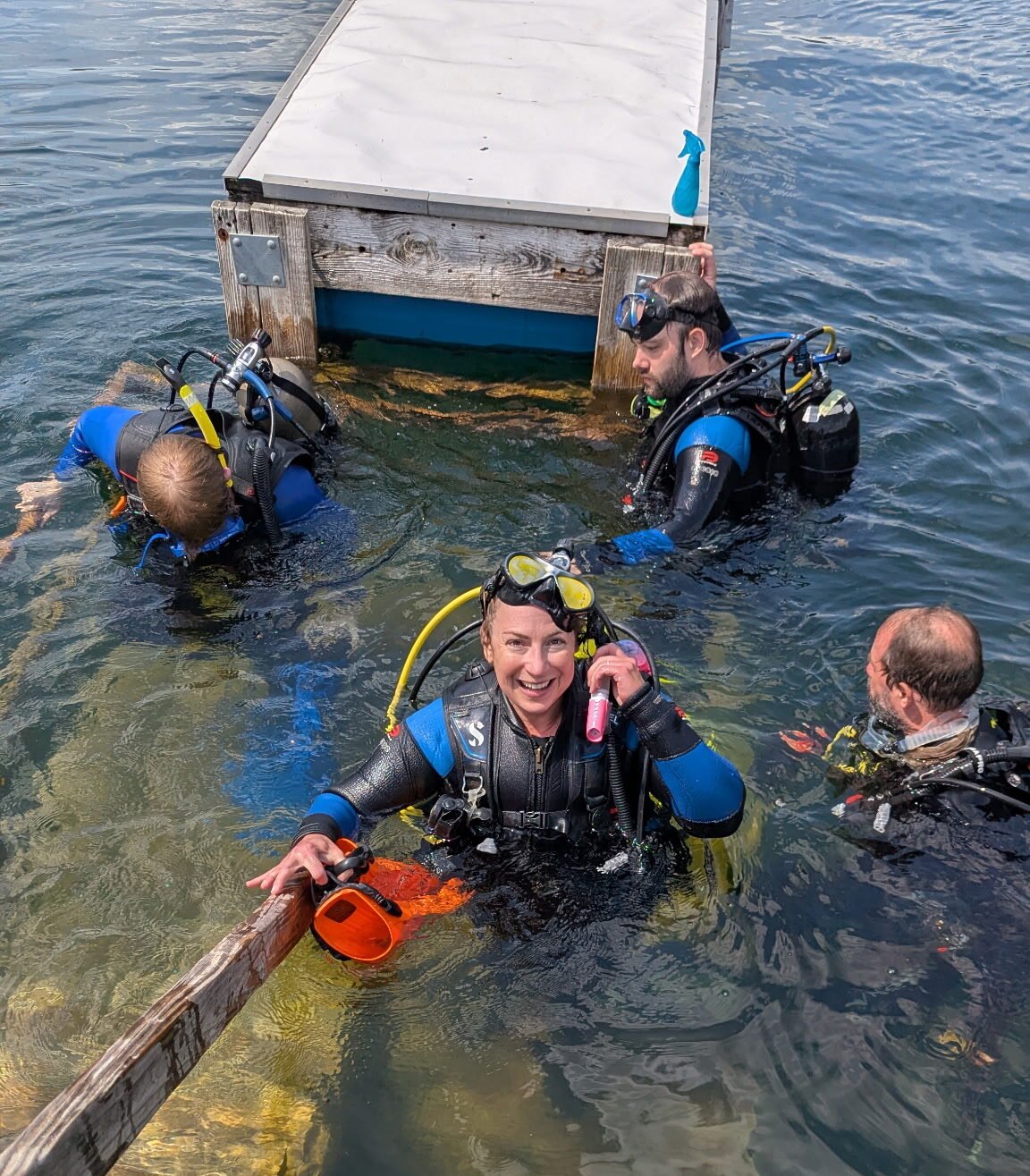
Finally, the day came to complete our certification dives. For this we needed deeper water than what the pool offered, so we drove out to a former quarry on a hot Saturday in July. There, in the murky waters where visibility was minimal, we dove. And dove.
On land, my wetsuit felt suffocating. Once we descended and hit the quarry’s thermocline, it offered some insulation from the chill, but not enough. My regulator slipped out on a few occasions, so I ended up gulping mouthfuls of brown quarry water. The aquatic life consisted of mainly sunfish, who approached us fearlessly; the novelty of being that close to another creature underwater wasn’t lost on me. Still, my happiest moment in the quarry was when I emerged from it after my final dive.
I lurched ashore, thinking only that I’d soon be free of my wetsuit and the cumbersome gear. The day had left me tired and thirsty and hungry, not to mention wet. I couldn’t wait to make a beeline for the car and change.
A stranger approached. As she came closer, I saw that she held a container in her hands. She extended it towards me.
“I made banana bread. Please, take some. I remember being absolutely starving after I finished my dives.”
I could have hugged her. Instead, I simply took a proffered slice. Then I took another. The bread tasted sweet and toothsome and delicious. I could have eaten half of the loaf, but I didn’t. Still half-stunned by unexpected and generous gesture, I thanked her.
Maybe it was my fatigue, maybe it was my sheer relief to be out of the quarry, but I felt suddenly emotional. It wasn’t just banana bread this stranger had offered me. She’d offered the gift of unearned kindness. I felt the unexpected grace of being given something I’d done nothing to deserve.
I hobbled on towards the car. Yes, I’d finally completed my scuba certification. But what I took away from the day felt far more meaningful. When you are barely standing upright, when you least expect it, you just might be seen.
An Attempt at Poetry
More than a decade ago, I did a cross-country road trip from St. Louis, MO to Texas to Montana, across the Dakotas and through the Midwest, back to where I’d started in Washington, D.C. I wrote a lot of prose on that trip, including the very first entries of this blog.
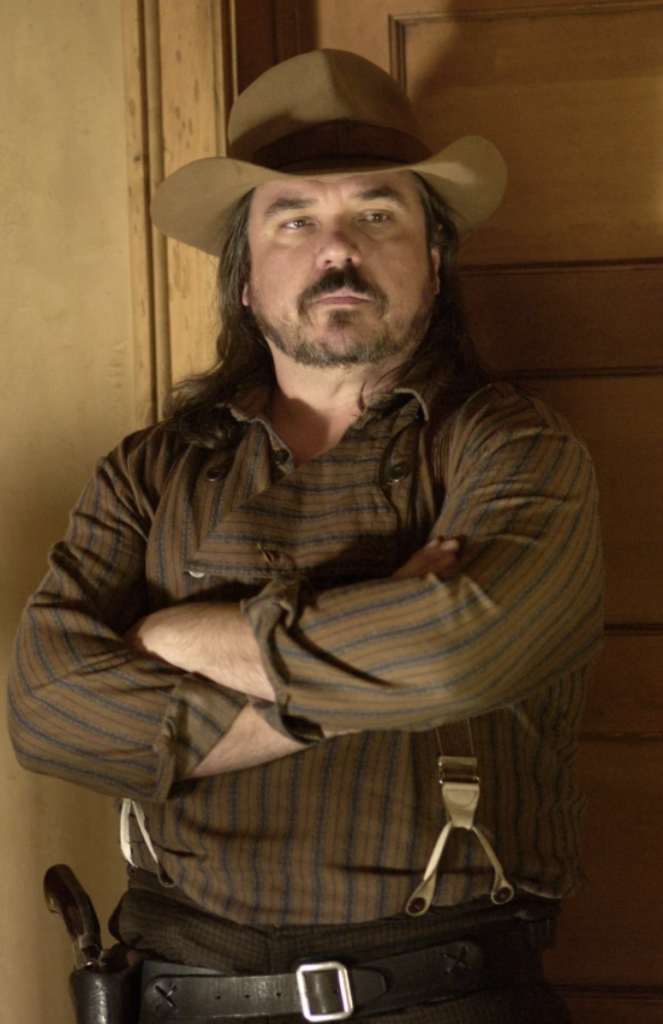
Along the way, I stopped in at archives and museums in various states. One of those was in Pierre, SD, where I spent a day browsing historical records from Deadwood. There were weather reports (captured in handwritten Army meteorological records), marriage records, coroner’s reports. I read as much as I could. Partly because historical research draws me like catnip. And partly because I’d been enthralled by HBO’s Deadwood series, and here I was turning pages that contained names I’d seen as characters on the show, only now appearing in records that were about real people. I was particularly struck by one of those records. The result is written below.
The Ghost of Dan Doherty Speaks
You meant to go swimming, you said.
Meant to go up to the pool
behind the dam,
but you didn’t get off.
That afternoon, July 3
the day before the fireworks.
Your occupation: saloon keeper.
And these words your deposition at an inquest
into some drifter’s death.
You just wanted to swim.
To feel the silence of being underwater
away from the whiskey and the whores,
into such peace as can be known
in this god-forsaken place.
A clear-eyed peace, you sought.
The brown creek waters the only opiate
to slip solace into your veins.
And you, standing, rising
face uptuned, smiling.
Shaking the droplets from your hair,
the creek’s mud sticking to your feet.
Note: On the HBO series, the character’s name is given as Dan Dority. In the records I viewed, the name appears as Dan Doherty.
On Writing
Recently, during a conversation that touched on passion projects, a friend asked me what I get out of writing. She was referring to my creative writing, specifically – the kind I usually don’t get paid for, and which rarely reaches an audience beyond my friends and family.
It’s a fair question. I understood her inquiry came from a place of curiosity, not judgment. It contained no implication that I was wasting my time (which Americans have precious little of), or that I could be doing something more productive.
I paused for a beat, hoping to come up with a brilliantly eloquent answer. I ended up giving her an honest one.
“Because it’s a space I can control,” I said.
I hurried to explain, lest she think me some kind of authoritarian kook.
“It’s a space that can be anything I want it to be. I can escape there, I can create whole worlds if I want to. I call the shots on what happens and what doesn’t. There’s something very comforting in that.”
I thought of the storybooks I made as a kid out of pieces of construction paper stapled together, the awkward penciled text and childish illustrations done with crayons. I thought of college when I read Virginia Woolf’s A Room of One’s Own for the first time. I thought of the Covid-19 pandemic and how I wrote my way through first a divorce and then through a layoff. I thought of the writers’ group I’d stumbled into in Pittsburgh, and how important those Saturday mornings were for letting my brain breathe. Or rest. Or turn cartwheels, if the mood struck.
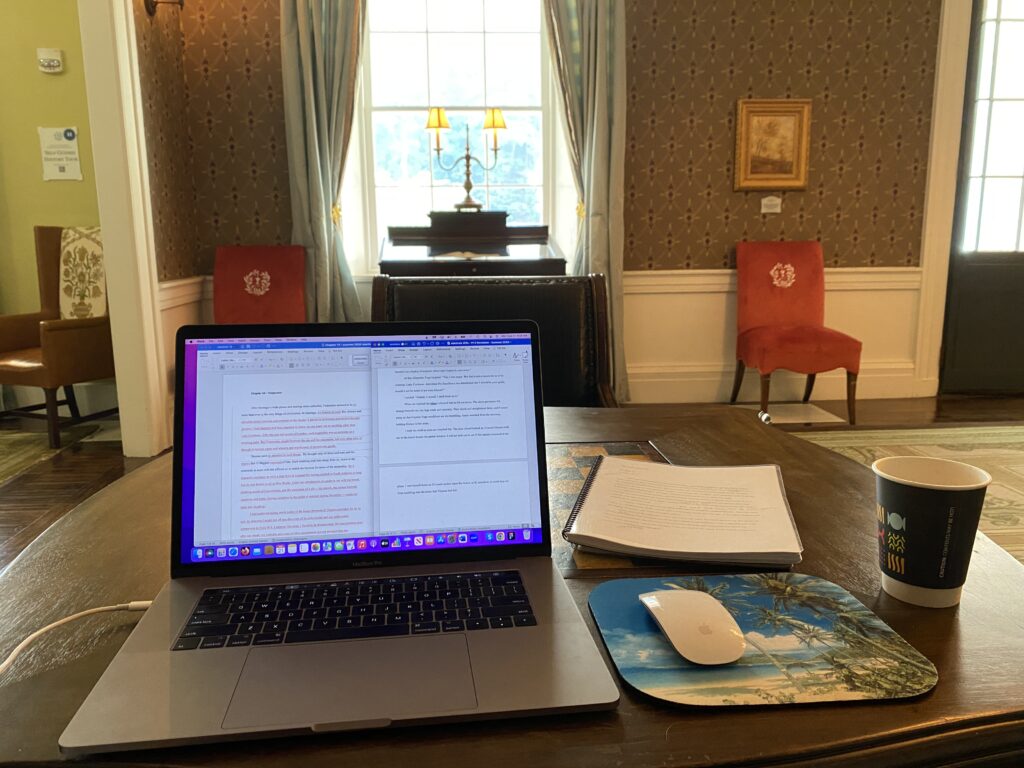
I don’t write because I like to write. I write because I have to write. It’s how I make sense of the world – or at least, find a way to laugh at it or cope with it. It’s where I make space for myself to live. And sometimes, sometimes, I crack the door open and invite others to step inside.
Becoming
Very little in my professional life has turned out as I expected. If I could travel back in time and describe my current resume to my childhood, teenage, or twenty-something self, my past incarnations would have reacted with skepticism. Perhaps I would have even sensed a little disillusionment; nothing on my LinkedIn profile screams of adventure or altruism. I didn’t go into the Peace Corps or move permanently oversees or devote decades of service to a nonprofit.
Nor have I, strictly speaking, shattered any glass ceilings, cut a swath across corporate org charts, or learned to exude effortless charm. If office politics is a game, consider me solidly in the JV league. I felt secretly relieved that Covid put office happy hours on hold indefinitely. I am a reluctant networker.
In fact, few things feel as out of my comfort zone as walking into a roomful of strangers being expected to make scintillating small talk. Yet on a Saturday morning a few weeks ago, that is exactly what I found myself doing.
I entered the room carrying a fair amount of trepidation. Sure, my introverted tendencies were firing urgent signals that I could be spending my perfectly good Saturday doing something less taxing than attending a full-day leadership workshop. And it wasn’t only my introversion sounding the alarm. The very fact of my presence seemed like a tacit recognition that I needed to be using my leisure hours for something other than leisure.I wondered if the other women in the room felt the same. Had they been indoctrinated in the same way I had? Were we all sitting here having acquiesced to what I consider one of the most exhausting aspects of American work culture, the constant insinuation that you’re not quite enough? The message that whatever it is that you’re doing, you could be – should be – doing more of something. Growing your network, your portfolio, your skillset.
I poured myself a cup of coffee and nibbled a banana muffin. I did not want to be doing any of those things. I especially did not want to be doing them on a drizzly Saturday morning.
Something in the cosmos was merciful, because I didn’t have to.
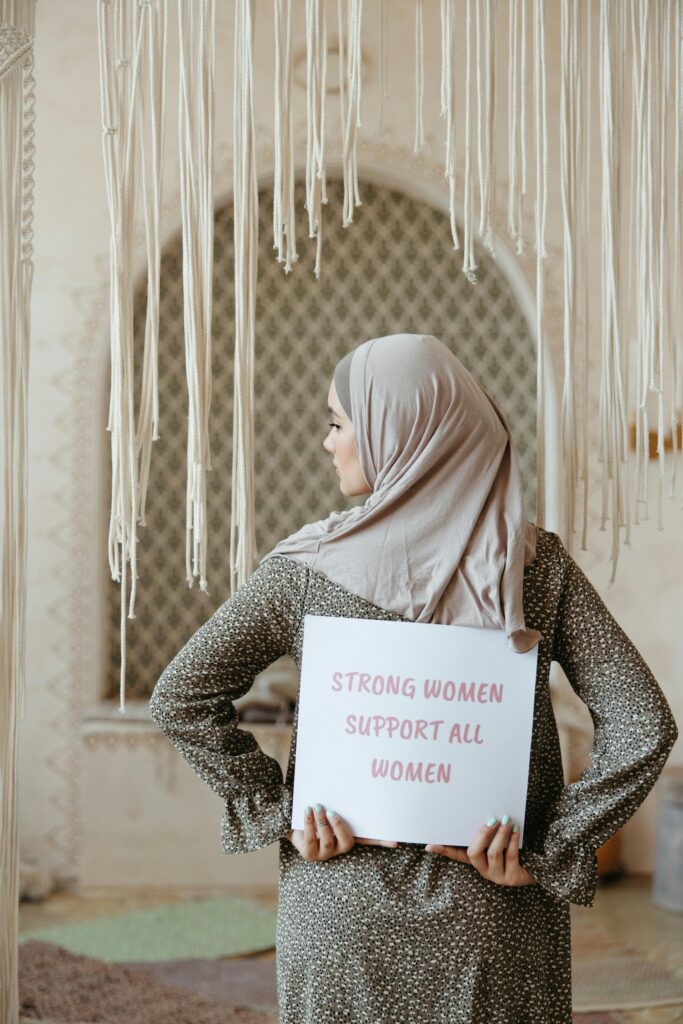
What I did do was talk. We all did. The words came slowly at first: a few comments, a long pause, another comment, another question. Then more hands raised. More voices. Heads nodding.
To my surprise, the hours passed quickly. I never saw a single resume from the other women in the room, but I heard their stories.
There were women between jobs, women returning to the workforce, women changing careers. These women had fought burnout. They’d navigated difficult workplaces. There was the career coach with a passion for mental health advocacy. The twentysomething deciding not to soft-pedal her ambitions. A woman nearing retirement age feeling deadlocked at the institution where she’d spent decades of her career. A woman in her 70s fresh out of an AI bootcamp and about to start her internship.
I heard the strength in them. I heard frustration and hope and tenacity. What bounced around that room weren’t proclamations of achievement – we weren’t rivals – but statements of presence. We were not here to get something; we hadn’t shown up because we believed we needed to better ourselves. We had come together that day to give, even if we didn’t know it.
I’d registered for the workshop expecting to be informed. I came away inspired. It was the best instance of unmet expectations I could recall. I was filled to the brim and humbled by the talent, energy, and intention I’d seen.
No one, to my knowledge, swapped any business cards. But I’m confident we’ve made connections.
Unrequited
I love spring. I always have. I love the flowers, the sky, the sunshine. As a kid, I loved the arrival of tadpoles and ducklings. (Part of me still does). In England, I loved seeing adverts in the newspaper when it was lambing season and then seeing a frantic white cloud of baby sheep race from one end of a pasture to the other. Even city living didn’t quash my enthusiasm for all things spring; I simply had to look a little harder for it.
I love clearing away winter’s detritus from the garden and planting the season’s first vegetables. I love that ice has vanished from sidewalks and that I can walk – and sometimes run – without fear that a misstep will send me skidding. I even love the first one or two times I crawl on hands and knees pulling weeds, simply because it means that things are growing again.
I love spring even though it doesn’t love me back.
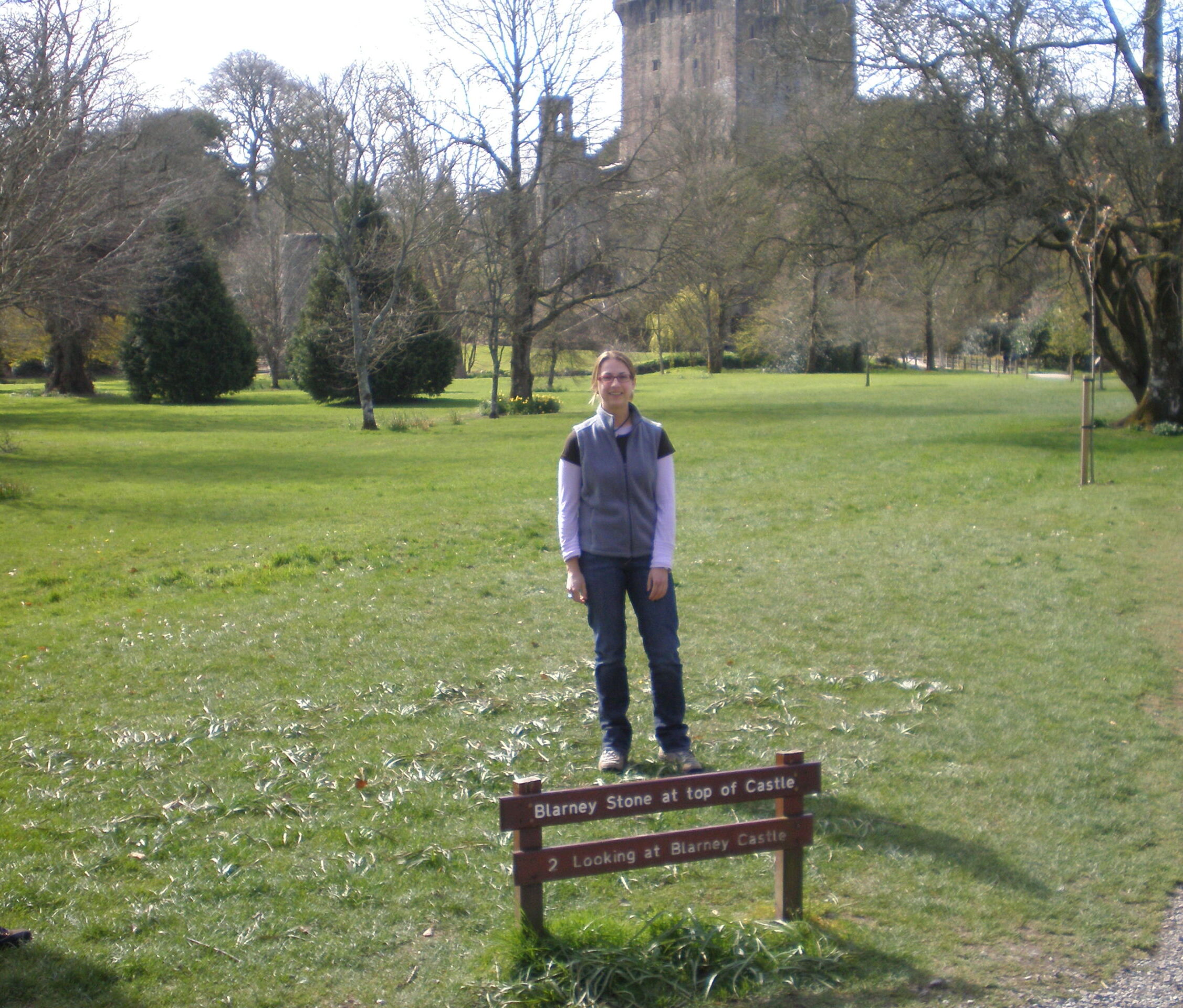
You might even call our dynamic acrimonious. In exchange for my decades of affection and appreciation, what spring gives me in return is simply cruel: seasonal allergies. My favorite time of year is the time when its hardest for me to be outside.
Take your pick of pollens: tree, grass, weed, mold. Basically, if there’s an airborne anything from a plant, my sinuses will detect it and go haywire.
Not that I let that stop me. I arm myself with antihistamines beginning in March. I keep neti pots, herbal teas, even the odd N95 mask at the ready. I look at spring through a window and calculate the pleasure of being outdoors against the physical discomfort that will likely result.
Despite the sneezing fits and ever-present tissues, I find myself drawn outside, eager to experience every moment that spring has to offer. Perhaps that’s the nature of love—it’s rarely perfect, and sometimes it’s even a little bit one-sided. If there’s anything that spring shows us, it’s that life moves in seasons. We need to take them as they come.
Absolution
When two Type-A personalities get together, their idea of “relaxing” can often take the form of a side quest. In Peter and I’s case, soon after we began dating, we created several lists of films to watch together. Each list centered on a different theme; some of the themes were admittedly more creative than others. These included:
- The Pittsburgh List. Movies set or filmed in Pittsburgh. Ex: Striking Distance, Flashdance, Adventureland, etc.
- Classic Film List. Cat on a Hot Tin Roof, Casablanca, Citizen Kane, Rebel Without a Cause. You get the idea.
- Vampire/Horror films. These ran the gamut from Interview with a Vampire to Halloween to Lost Boys.
- Epic Films. Lawrence of Arabia, Dr. Zhivago, Gone with the Wind, Ben Hur and so on.
- Arnold Schwarzennegar / Female-Fronted Films. Double features which paired a well-known Schwarzenegger movie with a film featuring one or more strong female leads. Think Little Women and Terminator 2, Commando and Bad Moms, Total Recall and Hidden Figures, or my personal favorite, Emma and Predator.
We also developed, based on word-of-mouth, a list we titled “Bonkers Bad Movies.” To be clear, the list did not include films that were so bad they became good in a kind of subversive, counterculture way. No, these films were genuinely awful. So horrible that watching them constituted punishment rather than entertainment. Films whose names I barely dare to type, let alone speak aloud. These were the Voldemorts of movies.
We gamely tackled this list, starting with Hard Ticket to Hawaii watched in a Toronto hotel room (a separate story). For the next two years, we persevered through more terrible movies, culminating the series this month with Tommy Wiseau’s The Room.
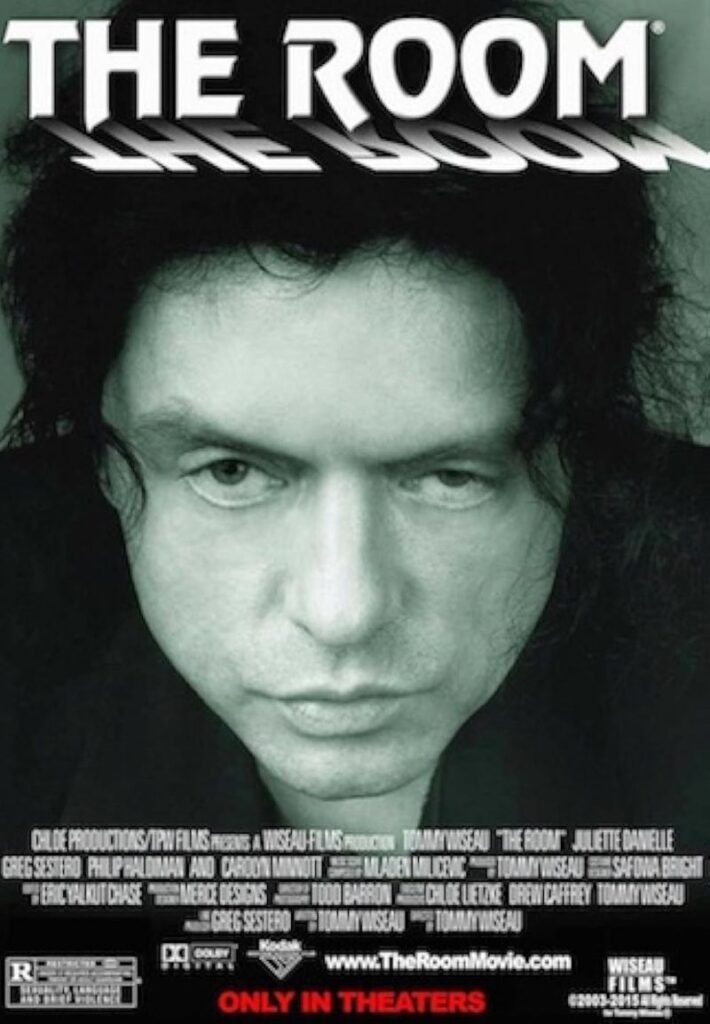
For those fortunate enough not to have seen this film, Google sums it up as follows:
Johnny is a successful banker who lives happily in a San Francisco townhouse with his fiancée, Lisa. One day, inexplicably, she gets bored of him and decides to seduce Johnny’s best friend, Mark. From there, nothing will be the same again.
Inexplicably. That word tells you all you need to know. Nothing in this film makes sense. Not the plot (such as it is). Not the dialogue. Not the costumes. Nothing.
Yet I couldn’t stop thinking about it. I read articles, looked up cast members’ personal websites, watched The Disaster Artist (a movie about making The Room), and contemplated reading the book of the same title by Greg Sestero, the actor who played Mark.
What was I looking for? An explanation? Closure? I couldn’t tell you. All I knew was that this hot mess of a movie was living in my head, rent-free.
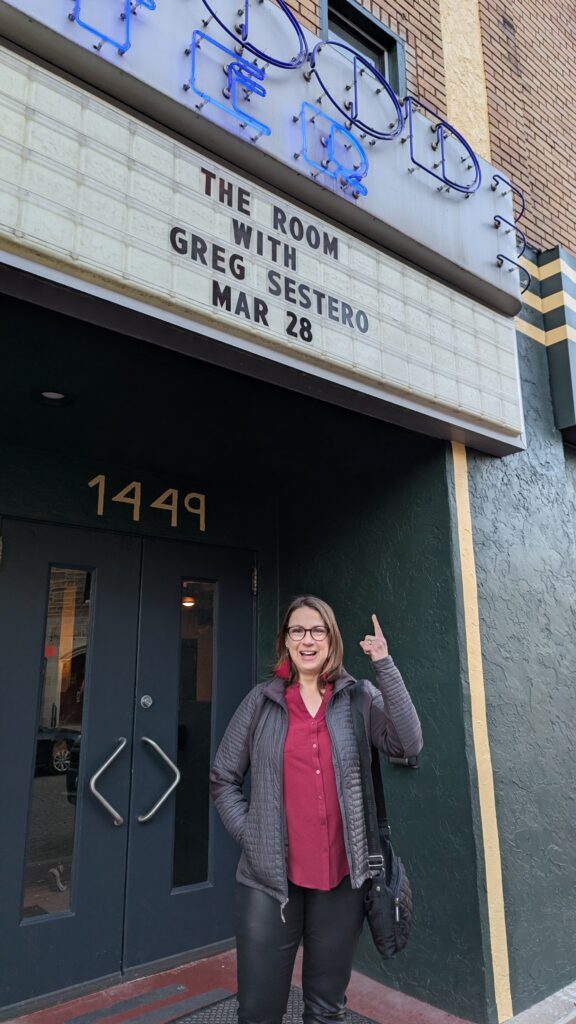
As if the universe sensed my predicament, I was presented with an opportunity. Not only was my neighborhood indie theater doing a special screening of The Room, but Greg Sestero would be hosting and participating in an audience Q&A.
As it happened, Peter and I already had plans for that evening. I cancelled them. I had a one-night-only window to get some answers. Nothing was going to stop me from taking it.
In the weeks leading up to the screening, I continued my ruminations. I kept coming back to Lisa, the errant fiancé, and Johnny, the blameless hero. In a film where underdeveloped characters are the norm and motivations as discernible as subatomic particles, this dynamic felt especially problematic.
The relationship itself had all the authenticity of a fake Rolex. The depth of Johnny’s devotion to Lisa is shown through a $20 bouquet of red roses, the gift of a dress (red, of course, and slinky), and his referral to her as “my princess,” along with the cringiest sex I’ve ever witnessed onscreen. Lisa is chided for thinking of leaving him because “he bought you a new car” and has a steady job – as if purchasing power and financial solvency equated entitlement to unquestioning loyalty. Watched from the vantage point of a woman who’s proudly supported herself for nearly a quarter century, the notion smacked of quid pro quo on steroids.
And it pissed me off. First, for the antiquated ideology underpinning the relationship. Second, that the hero’s supposed romantic gestures had nothing to do with the woman herself and everything to do with a script that – literally and figuratively – grants her a space entirely constrained by the male gaze. Does Lisa like roses? Or dresses? Or even the color red?
We as the audience have no idea. And neither, I bet, does Johnny/Tommy.
What’s meant to be, I assume, a portrayal of a loving connection feels about as personal and intimate as junk mail. I’m not sure what meaning the relationship had for either character, aside from offering Johnny an extended interlude of self-deluded cosplay and casual sexism. Lisa doesn’t betray him so much as step outside of the rigidly constructed space he’s allowed her. He doesn’t even give her the humanity of a motivation.
By the film’s end, having watched the cardboard archetypes wend their way towards an inevitable implosion for the better part of two hours, I am exhausted and relieved. I am laughing.
I try to take a generous view. I watch The Disaster Artist to see if there is something admirable about an outsider taking on the Hollywood hegemony. I think long and hard about art and the canon and how the rules around what is considered “good” can be both rigid and arbitrary. I contemplate art for art’s sake.
I’m still pissed. And at last, I figure out why. Why I was so bothered that a crappy film made 20 years had gained a cult following and taken on an improbable afterlife so that its director is seen by some, perhaps, as a visionary iconoclast.
Bullshit, my inner voice cried. The Room is not iconoclastic. The film’s message (if you could call it that) is not original. Bristling with estrogen, I realized that The Room was just a tired variation of the same old chauvinistic shit. In reality, a story that is the very opposite of subversive.
On the night of the screening, I found myself standing in front of Greg Sestero, who seemed normal enough. I debated whether or not to pop the question. Why, Greg? Why was this whole sordid tale expressed as a film instead of a therapy session?
But I didn’t ask. I’d already found my answer. I smiled, asked for his autograph, and thanked him. And with it, at last, I expelled The Room from my system.
Vibes
New York City is more than a place. It’s a mood. It’s a state of being.
Or so it has seemed to me, from the first time I visited during a high school chorus field trip (imagine a few dozen teenagers belting “Seasons of Love” atop the Empire State Building, in the rain), to my most recent stop just last month. It’s a place where things happen, and I can’t help but be caught up in that energy.
Perhaps that is why I never stay long in New York. Seventy-two hours is about my max. Then my need for solitude – or at least, the absence of a crowd – becomes so acute as to become a craving. Walking in Central Park or across the Brooklyn Bridge sometimes helps. The exercise and being out-of-doors typically buys me a little time. I can drift among strangers, cloaked in anonymity, and lose myself in my thoughts.
I did no such pensive walking on my last visit. It occurred in January, and the itinerary was decidedly indoorsy. ’d come to New York on a mission to see Keanu Reeves in Waiting for Godot. He was headlining a production at the Hudson Theater along with Alex Winter, and the opportunity to watch the stars of the Bill and Ted franchise in real, live, serious theater was one I couldn’t pass up.
I’ve been absolutely fascinated by Waiting for Godot for years. Decades, even. Admittedly, I’d never seen the show – I’d never even read the play – but I was well aware of its cachet as a touchstone for the theater of the absurd. The very first days of 2026 seemed as good a time as any to ante up.
And so Peter and I found ourselves queued up on sidewalks still covered with paper confetti from New Year’s Eve, waiting among the closing weekend crowds. Then we were in our seats, the house lights dimmed, and the curtain rose.
I realized my mistake immediately. In our haste to leave the hotel, I’d forgotten my glasses on the bedside table. I could see the stage, I could see the set, and I could make out the actors’ movements. But I could not see their faces. At least, I saw them only in a somewhat blurred, Impressionistic painting kind of way.
I squinted my way through the performance. By paying close attention to gestures and tone of voice, I followed what was going on. Not that there’s much of a plot in Waiting for Godot; that’s part of the point.
The irony of it struck me. Here I was, finally witnessing a piece of theater that had lived on my bucket list for years – in NYC, of all places. On closing weekend. With a celebrity cast. And I could not see the actors.
I like to think Samuel Beckett would have laughed. I did. Both at the situation, with all the ridiculous little tragedy folded into it, and at the play itself. Yes, it’s dark. It’s stark. Sometimes the language cascades into hopelessness, and the audience has no choice but to go right along with it.
And yet I could not say it was a sad play. Of all the emotions I witnessed on stage that night, fear was not among them. That fact whistled itself through my consciousness like a signal beacon. And with it, a whisper of hope.
I knew what it was to live with fear. And I knew what it was to live without it. I nodded, as if Samuel Beckett sat right beside me. I looked at the stage, smiling. I laughed again.
Crunched
For this post, I did some math. I wanted to know if it was possible, based on “average” statistical numbers regarding American adults, to actually exercise the suggested amount each week, brush our teeth for 4 minutes a day, floss, eat meals that were neither ultraprocessed nor fast food, and do a deep cleaning at least once every season. In general, to follow recommended practices for healthy bodies and healthy homes.
The short answer is no.
No, it is not. And that isn’t even taking into account mental and emotional well-being, social connections, being a parent, or owning a pet. And if you’re in a food desert (as approximately 19 million Americans are), relying on public transportation to commute, or working multiple jobs, it only gets worse.
Based on my calculations – which are admittedly rough – if you’re working one fulltime job, own a car, and don’t have kids, 62% of your time each week will be taken up simply by the essential activities of eating, sleeping, earning a living, and basic hygiene. If you don’t own a car and rely on public transportation, work multiple jobs, and/or have children, that jumps up to around 72 – 82%.
The time crunch becomes compounded if someone’s responsibilities include caring for other family members, have an above-average commute length, and/or need to manage their own medical conditions. Even adding in basic healthcare (routine visits, dental cleanings, and eye exams) and 150 minutes per week of moderate activity (generally considered the threshold for adequate exercise) are stretch based on the numbers so far. Looking at just the time needed for essential activities plus household tasks— cleaning, laundry, yardwork and pet care — non-parents have 72% of their time taken up, while an adult with young children* has up to 90% of her or his hours spoken for.
This calculation doesn’t include miscellaneous errands or chores like paying bills, renewing your driver’s license, getting kids to or from daycare or school, changing lightbulbs, getting a haircut, buying toothpaste, or the dozens of other activities considered routine aspects of adulting. It doesn’t include socializing with friends, spending time with family, or participation in any hobbies or sports. It doesn’t include television or social media.
It doesn’t account for the fact that if you’re a woman, you’re more likely to be spending additional hours on food preparation and your appearance.
Yes, I’m using estimates based on averages, and individual experiences can vary quite a lot depending on region, age, gender, marital status, and half a dozen other factors. For example, people aged 75 and up spend nearly an hour a day reading, while teenagers average less than 10 minutes. Gen Z loves to take long showers. If you’re an adult aged 35 to 44, you probably have less leisure time than any other demographic.
And yet, no matter how you slice it, I think it is fair to say that we are time poor. No wonder we “multitask.” No wonder eating while watching some streaming service is common. No wonder we miss doctor’s visits, skip flossing, and can live for a week off frozen pizzas. We forget to clean the oven and can’t muster the effort to get to the gym.
There are those who will argue that with enough hard work, enough discipline, enough determination, we can do it all. It’s personal choices, not social and economic structures that hold the key to our fates. People should spend less time complaining and more time picking themselves up by their bootstraps.
I would disagree. That math just doesn’t work. I wish it did. And it until it does, maybe we should spend less time dispensing well-meaning yet unrealistic advice on matters both big and small. Advice that is wildly unattuned to life’s realities helps no one. Maybe its time to ask what does.
The Numbers
| Activity (Average Hours per Week) | Single Job, Car, Own Home | Multiple Jobs, No Car, Rent Home |
| Sleep | 49 | 49 |
| Work | 42 | 50 |
| Commute | 5 | 10 |
| Food purchase | 2 | 4 |
| Food preparation | 5 | 7 |
| Hygiene | 2 | 2 |
| Subtotal: Essentials | 105 | 122 |
| Percentage of time (Subtotal / 168 hours = %) | 62% | 72% |
| Household chores (cleaning, laundry, yardwork) | 10 | 6 |
| Pet care | 7 | 7 |
| Child care | 7 | 13 |
| Subtotal – Add chores | 115 | 128 |
| Subtotal – Add chores, add pet | 122 | 135 |
| Subtotal – Add chore, add pet, add child | 129 | 148 |
| Percentage of time (Subtotal / 168 hours = %) | 68 – 78% | 76 – 87% |
Note: Hours and percentages rounded to nearest whole number. Sleep calculated at 7 hours per night.
*Young child is a child under age 6
References:
American Cleaning Institute. (2018). Survey results: Americans spend nearly six hours each week cleaning—no wonder it feels like it. https://www.cleaninginstitute.org/newsroom/releases/2018/survey-results-americans-spend-nearly-six-hours-each-week-cleaning-wonder-it
Capital One Shopping. (n.d.). Grocery shopping statistics. https://capitaloneshopping.com/research/grocery-shopping-statistics/
Harris Poll. (n.d.). Shower habits. https://theharrispoll.com/briefs/shower-habits/
Mayo Clinic. (n.d.). Brushing your teeth. https://www.mayoclinic.org/healthy-lifestyle/adult-health/expert-answers/brushing-your-teeth/faq-20058193
Pennsylvania Association of Realtors. (n.d.). Homeowners more likely to spend longer hours on household chores. https://www.parealtors.org/blog/homeowners-more-likely-to-spend-longer-hours-on-household-chores/
Severn River Animal Hospital. (2024, March 18). Do you pay enough attention to your pets? https://severnriverah.com/2024/03/18/do-you-pay-enough-attention-to-your-pets/
U.S. Bureau of Labor Statistics. (n.d.). Employment by full-time and part-time status and educational attainment. https://www.bls.gov/charts/american-time-use/emp-by-ftpt-job-edu-h.htm
U.S. Bureau of Labor Statistics. (n.d.). Time spent in primary activities by parents. https://www.bls.gov/charts/american-time-use/activity-by-parent.htm
U.S. Bureau of Labor Statistics. (n.d.). American Time Use Survey—2023 results. https://www.bls.gov/news.release/atus.nr0.htm
U.S. Census Bureau. (n.d.). American Community Survey 1-year estimates: Commuting guidance. https://www.census.gov/topics/employment/commuting/guidance/acs-1yr.html
U.S. Department of Agriculture, Economic Research Service. (n.d.). Food Access Research Atlas. https://www.ers.usda.gov/data-products/food-access-research-atlas
U.S. Department of Agriculture, Economic Research Service. (2020, April). More Americans spend more time in food-related activities than a decade ago. https://www.ers.usda.gov/amber-waves/2020/april/more-americans-spend-more-time-in-food-related-activities-than-a-decade-ago
Schooled
Earlier this fall I became a college student. Not a full-time one (I kept my day job), and not at a brick-and-mortar university (I’d enrolled in an online program), but a student nevertheless.
Returning to formal education in my forties brought excitement and a strong waft of nostalgia. In my late teens and early 20s, I’d loved college. This wasn’t simply because, 600 miles away from home and on a picturesque campus nestled on the edge of one of country’s largest metropolitan areas, I had more autonomy and more options than I’d ever experienced. Of course I enjoyed meeting new people, seeing new places, and the general thrill of having my universe widen. On campus parties. Off-campus parties. Women I befriended and guys I crushed on. Discovering that I could indeed stay out past 10pm and even enjoy myself while doing so.
Those were the social and developmental aspects of college, and I relished them.
But I also loved the college part of college. The academic part. The time I spent with books (I was an English lit major). I loved that college gave me a full-time license to go on long mental perambulations, to wade deep into ideas, to weight them and to try them out. My public middle and high schools certainly had a place for kids of an academic bent, but with college – at a small liberal arts university – I felt I’d found a whole new tribe of kin.
During the pandemic I’d taken some online courses on topics related to my professional field and allowed Duolingo to hound me into daily French practice. I’d made attempts to learn to play the guitar. I dabbled in webinars.
This felt different.
First, the sheer volume of reading. On a screen. I lost count of the hours I spent doing online modules. Then there was the digital textbook, which for some mind-boggling and inexplicable reason lacked compatibility with any e-reader known to man. I ended up reading the entire thing on my phone (grudgingly). I got used to it, but I never stopped missing printed textbooks. Something about the ability to highlight and annotate pages made me feel more connected to what I was reading, as if knowledge were a physical thing that I could hold in my hands.
I missed classroom discussions. I didn’t want to type my thoughts, I wanted to speak them.
And I wanted to hear my classmates’ opinions. I wanted to feel the energy of ideas connecting. I wanted to communicate in real time. I wanted to be part of a common endeavor instead of a woman sitting alone at her laptop, tapping on keys. Yes, I, the introvert, found myself yearning to talk to people.
With so many dimensions of the experience so different from what I most fondly associated with college, I felt somewhat at a loss. Was there anything that would connect my present circumstances to my youthful memories? Anything that could?
The answer, I found, was yes. Textbook woes and asynchronous discussions aside, I’d nevertheless embarked on an intellectual adventure. My mind traveled into new places, exploring a discipline that I’d long been curious about but hadn’t properly explored.
Now I was, in a way, on the road less traveled, taking the path I hadn’t chosen as an undergrad. And that, perhaps, might make all the difference.
The Social Construct
I spent most of my life disliking the month of November. It seemed to me the doldrums of the year: too few leaves for autumn, too little snow for winter. Summer is long past, and spring a distant dream. Few things can grow. Few even want to.
The clouds are low and gray and heavy. The days are short. In the mornings there may be frost on the ground, and the wind is cold. After the splendor of autumn, the world appears almost colorless. Instead of bright vibrancy, we see only shades of brown and ash. One week passes into the next with little distinction.
In short, neglected November has nothing of its own to recommend it. It is neither fish nor fowl. It is a month to be passed through on the way to something better.
And yet, it is precisely these amorphous qualities that have given me a new appreciation for November. It is a blank canvas. November’s very emptiness creates a bleak beauty.
It’s a great month for writing. (Perhaps unsurprisingly, NaNoWriMo takes place in November.) As fallen leaves shuffle outside it is easy to sit at a desk, or a coffee shop, and let pen move over paper, or fingers type on keyboard. Dark days are good for gestation. We can incubate our thoughts, turn them around, swaddle them, turn them again, and perhaps eventually send them out into the world.
I’m reminded of the pandemic and the opportunity it gave us to turn inward. For some, those long months of collective pause and uncertainty created loneliness and distress. For others, it brought a form of relief. There was no longer the pressure —or even the possibility —of participating in social rituals that felt more performative than substantive. There was no expectation to be “on.” I for one felt no grief at having post-work happy hours indefinitely suspended. I had a German shepherd and two cats to keep me company, and plenty of books.
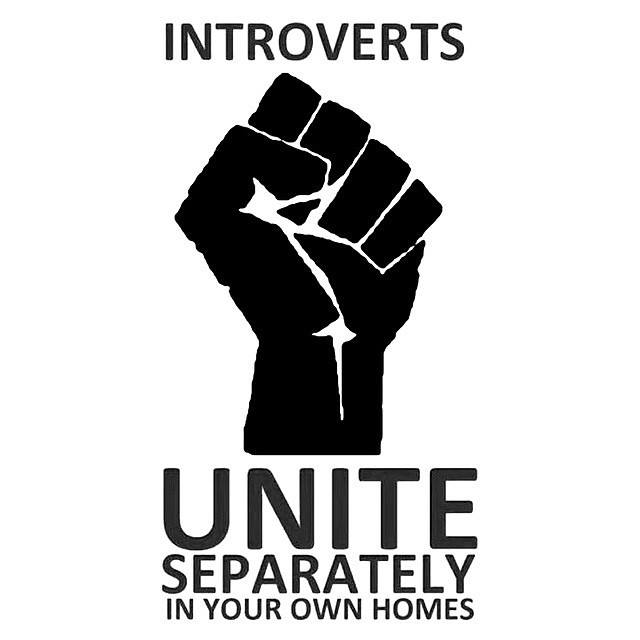
That’s not to say I avoided interaction altogether, or that I never desired or sought out connection. I did. Virtually. I took a strange form of joy in the possibilities that online happenings brought. Thanks to Zoom and similar platforms, I experienced a cocktail party at Highclere Castle, watched a live webcast of the “great conjunction,” attended a panel discussion with Anthony Fauci, and listened to a pianist riff as she blended American blues with Celtic folk. I took classes. I met friends for drinks, except I was on my couch, and they were on theirs.
I enjoyed these as much— or more than— gathering in-person. First, I remained in the comfort of my own home. Secondly, no matter how put-together I appeared from the waist up, there were high odds that my pants had an elastic waist. And last but not least, I partook in everything on my own terms. I could consume as much or as little as I pleased. Or none at all.
Our present culture often equates being still with being stagnant. This is unfortunate. I believe there are times when we must all like fallow. To pause. To feel the a quiet power of a full stop.
November’s gift is space to reflect. To find peace, even in the long dark nights, knowing only that you’ll someday emerge. So settle in. Get comfortable. The world will be there when you’re ready.
P.S. I am aware that November includes Thanksgiving, one of the busiest holidays of the year in the U.S. For this one, my husband and I did next to nothing. We joined friends for a Turkey Trot, ate quiche, and played Battleship. That night I cooked dinner from stuff I found in the pantry, and we watched Die Hard 2. It was wonderful.